#WATCH ISRO launches IRNSS-1G to complete India's own navigational satellite system from Sriharikota.https://t.co/yZfB01lLsU— ANI (@ANI_news) April 28, 2016
Showing posts with label India navy. Show all posts
Showing posts with label India navy. Show all posts
April 28, 2016
India's navigational satellite system constellation complete with IRNSS-1G launch

April 3, 2016

March 31, 2016
March 30, 2016
Defexpo 2016
Akash Surface- to - Air missile on a static display at Defexpo 2016, Goa


— DPR (@SpokespersonMoD) March 30, 2016
— DPR (@SpokespersonMoD) March 30, 2016
— DPR (@SpokespersonMoD) March 30, 2016
— DPR (@SpokespersonMoD) March 30, 2016
#GRSE Garden Reach Shipbuilders & Engineers Ltd. Pavilion at #Defexpo 2016, #Goa pic.twitter.com/cNWIBXBEQX— DPR (@SpokespersonMoD) March 30, 2016
— DPR (@SpokespersonMoD) March 30, 2016
— DPR (@SpokespersonMoD) March 30, 2016
— DPR (@SpokespersonMoD) March 30, 2016
March 13, 2016
India - 6th ship of LCU MK IV project launched today at GRSE Kolkata


6th ship of LCU MK IV project launched today at GRSE Kolkata. 1/2 pic.twitter.com/bRAGs3CDPD— DPR (@SpokespersonMoD) March 12, 2016
March 12, 2016
Indian Army Caption this contest
Gurkhas

Caption this for us..... pic.twitter.com/9pL89oOYje— ADG PI - INDIAN ARMY (@adgpi) March 12, 2016
March 3, 2016
CCTV footage which shows attack near Indian consulate in Jalalabad,Afghanistan
Suicide bomber detonation on tape
.@TimesNow accesses CCTV footage which shows attack near Indian consulate in Jalalabad,Afghanistan #JalalabadBombinghttps://t.co/nGohRip0ol— TIMES NOW (@TimesNow) March 3, 2016
December 7, 2015
Delivery target date for India's 3rd Aircraft carrier - INS Vikrant set to December 2018

India's first indigenous aircraft carrier INS Vikrant is on its way to be delivered to the Navy in December, 2018, government said on Friday.
Undocked in June this year at Cochin Shipyard Limited, the construction of the first of the two planned Vikrant-class future aircraft carrier began in 2008 .
Replying to a question in Lok Sabha, Minister of State for defence Rao Inderjit Singh said that there has been a delay in the work of constructing the carrier mainly due to non-availability of warship grade steel, delayed ordering of Propulsion System Integration and delay in Russian approvals for design and equipment supply. "The targeted date of delivery to Indian Navy is December, 2018," he said.
The indigenous aircraft carrier has been undocked post completion of underwater structural work and the government has approved revision of cost of project to Rs.19,341 Crores, the minister added.
Once completed, the 40,000 tonne aircraft, which has been designed by Indian Navy's Directorate of Naval Design, will make India join the coveted club of the USA, UK, France and Russia – the only countries that design and make these ships on their own.
India currently operates two aircraft carriers, INS Viraat and INS Vikramaditya.
November 4, 2015
Indian-Pakistan Navy ratios now one-third, one-sixth or one-tenth
-090309-N-4774B-055.jpg)
Only 10 per cent of the defence budget goes to the navy, making even the day-to-day operations, maintenance and repairs a challenge, while India builds up on its fleet, acquiring warships, aircraft carriers and nuclear submarines, it emerged during a media briefing about the maritime exercise Seaspark 2015.
The exercise began in north Arabian Sea on Tuesday after a gap of three years.
“India has a strong sea strength,” Deputy Chief of Naval Staff (Plans) Commodore Raja Rab Nawaz said while sharing information about the number of warships, etc, acquired by both countries and the navy’s role in the scenario, which may be described as strategically defensive, although tactically offensive.
Later, while answering media’s queries, Deputy Chief of Naval Staff (Operations) Rear Admiral Kaleem Shaukat said: “Our strength as compared to India’s naval strength may be different when compared with various aspects. The ratios come out as something like one-third, one-sixth or one-tenth. The conventional gaps show how behind we are in building our sea strength while India has realised the sea’s importance.
“But, in order to shorten these gaps, the Pakistan Navy, like the Pakistan Army and Pakistan Air Force, has a development plan according to our resources. We also ask the government for extra funding as per our requirements, which does come through. For instance, we approach them case to case for things such as fleet tankers, missile boats and submarines.”
He said India planned to be a big global power through the sea which was not on Pakistan’s agenda at the moment because of monetary reasons as well as the prevalent mindset here.
“Getting aircraft carriers is not a part of our development plan as besides being an asset it can also be a target. Our state cannot afford to use all its navy to protect our aircraft carriers,” he said.
Rear Admiral Shaukat admitted that India’s aircraft carriers, although primarily there to project power, posed a threat. “We’ll see how we can neutralise this threat,” he said, adding that the navy was protecting the disputed Sir Creek area and other sensitive points. “Our marines are deployed in our creek areas.”
When asked if spies or terrorists from across the border might infiltrate into Pakistan while impersonating as fishermen who are picked up by the dozen all the time, he said fishermen were handled by the Pakistan Maritime Security Agency (PMSA).
Rear Admiral Shaukat said that besides 990km of coastal areas, Pakistan had land borders and an agriculture and continental mindset instead of looking to the sea for food. “We have blue water capability but our operations are sustained. We can safeguard our trade. But our merchant fleet has also become smaller. Our fish catch is worth billions of dollars but we are not exporting much. The mindset needs to be changed,” he said.
The navy’s contribution in the fields of education, health and job opportunities for the coastal communities, such as building hospitals in Ormara and Turbat in Balochistan, holding free medical camps and recruiting from the community in Gwadar, were also mentioned. The force carried out extensive search, rescue and relief operations during international and national disasters and contingencies, while playing an important role in rehabilitation, officials said.
Objective of exercise
The deputy chief of naval staff said that besides providing impetus to the country’s resolve for maintaining peace, security and stability in the region, the objective of the exercise was to corroborate the navy’s operational plans, assess its war preparedness and enhance its interoperability with the air force and army.
All operational units of the navy, including ships, submarines, aircraft, unmanned aerial vehicles, special forces and marines, along with elements of the PMSA, PAF and army, are participating in the exercise to make the ports and territorial waters safe from all kinds of threats, including non-traditional challenges such as piracy and pollution.
“During the exercise, full spectrum of threats would be exercised ranging from conventional to asymmetric, cyber and information warfare domains. Besides enhancement of operational preparedness, the exercise will also focus on seaward defence of the coast and their response against emerging non-traditional threats emanating from sea,” the official said.
“Being located at the confluence of world’s major sea routes, Pakistan’s strategic location can be exploited to our advantage through the development of the maritime sector and a strong navy for its effective defence. Pakistan Navy’s operational and development plans are, therefore, focused to maintain a potent and well-balanced naval force to deter aggression at sea. Being an essential appendage to the foreign policy, we also strive to foster stronger navy-to-navy relations through regular exercises and ship visits with regional as well as extra-regional navies,” he added.
The exercise will conclude on Nov 12.
October 16, 2015
India-US-Japan joint naval exercise Malabar-2015 - Part 2
Lt. James Stranges on MQ-8B w/ #IndianNavy officer during @USSFortWorth (LCS 3) tour as part of #Malabar2015 Exercise pic.twitter.com/Q6nA5EX40E
— USConsulateChennai (@USAndChennai) October 15, 2015
USS Theodore Roosevelt @TheRealCVN71 & @USNavy to Participate in #Malabar2015 http://t.co/T8DxHVtZUu pic.twitter.com/yvb6LS4iBx
— Aircraft Carriers (@aircraftcarrier) October 15, 2015
2/n Along with #IndianNavy & US #NavalForces, JMSDF will also participate in #Malabar2015: http://t.co/uCrl0dkKdk pic.twitter.com/aZzXOKE4iI
— PIB India (@PIB_India) October 15, 2015
19th edition of the military exercise #Malabar2015 to be conducted in the Bay of Bengal fr… pic.twitter.com/zagK0Ljhhb pic.twitter.com/ZPcH6m9joo
— D.K .Sharma (@DParashar82) October 15, 2015
USS Theodore Roosevelt @TheRealCVN71 & @USNavy team up with India & Japan for #Malabar2015 http://t.co/TuDRCIiXI6 pic.twitter.com/ou336klh2P
— Aircraft Carriers (@aircraftcarrier) October 14, 2015
August 13, 2015
Indian Democracy's shouting and parliament disruption leaders
They blew away around $50 million dollars in 18 days shouting and disrupting parliament
Gaurav, son of Assam Chief Minister and and Sushmita Dev, daughter of C#$%@# veteran Santosh Mohan Dev.
They don't care about falling stock markets or tax collection for paying govt employees.

Pappu cheat sheet
Pappu was given this sheet to read out y'day. True son of Momma. Check content by zooming the pic pic.twitter.com/C5z1gGR68R
— Tajinder Pal S Bagga (@tajinderbagga) August 13, 2015

November 11, 2014
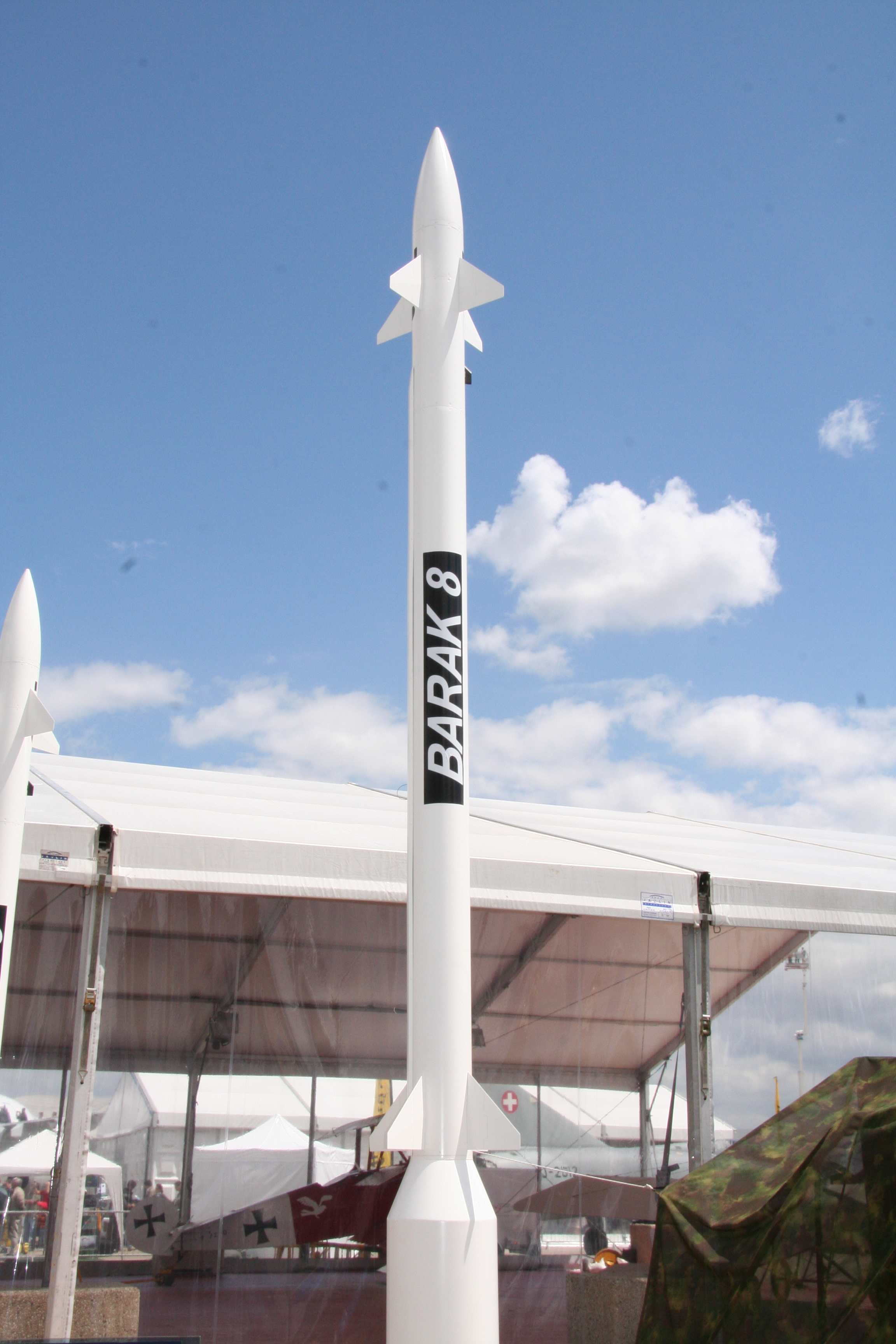
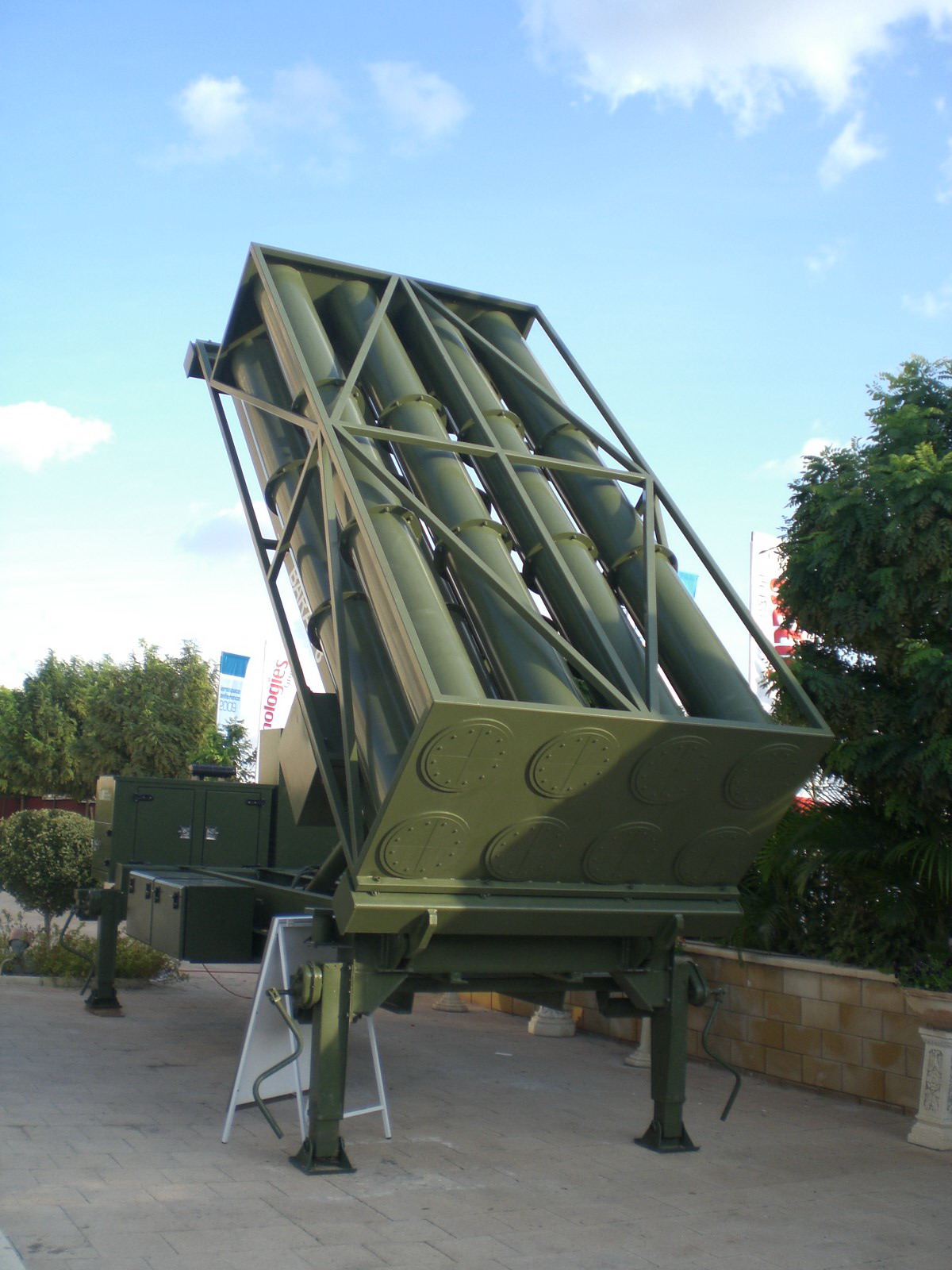
Indo-Israeli Long Range Surface-to-Air Missile (LR-SAM) successfully tested
http://www.asiandefencenews.com/2014/10/indo-israeli-surface-to-air-missile.html
%2B1.jpg)
%2B2.jpg)
PTI
India and Israel today successfully test-fired a long range surface to air missile jointly developed by them, marking a milestone in bilateral cooperation in developing advanced weapon systems."The Long Range Surface to Air Missile (LRSAM) is successfully flight tested against a flying target in a range in Israel, today," an official statement said.
Israel Aerospace Industries (IAI) carried out the test in the presence of Defence Research & Development Organisation (DRDO) scientists and officials of the Indian Army. The LRSAM system is jointly developed by DRDO and IAI Israel.
"All the systems including the radar, communication launch systems and the missile system have performed as expected and hit the target directly and damaged it. The system is developed for both Israel Defence Forces and Indian Armed Forces," the statement said.
DRDO chief and Scientific Advisor to Defence Minister Dr Avinash Chander witnessed the test along with IAI President Joseph Weiss and other top officials of the Israel Defence Forces.Mr Chander termed the event as a milestone in cooperation between the two countries in developing advanced weapon systems.
September 3, 2014
Offshore Patrol Vessel INS Sumitra to be commissioned in the Indian Navy tomorrow
Photo - Goa Shipyard

Offshore Patrol Vessel INS Sumitra will be commissioned by Chief of Naval Staff, Admiral RK Dhowan on Thursday, a Defence release here said.
"The induction of INS Sumitra in the Eastern Naval Command and her basing at Chennai will enhance the offshore surveillance and maritime patrolling capability on India's eastern seaboard in addition to giving a fillip to anti-piracy operations actively being undertaken by the Indian Navy," it said.
INS Sumitra will have a displacement of about 2,200 tonnes and measures about 105 metres in length and 13 metres at the beam.The weapon and sensor outfit includes a Super Rapid Gun Mount (SRGM) 76.2 mm gun with an electro-optic fire control system, two 30 mm guns as Close In Weapon Systems (CIWS), Kavach chaff launchers for self-protection and a state-of-art Electronic Warfare Suite comprising Sanket Mk III Electronic Support Measure (ESM) system and ELK 7036 Communication Intelligence (COMINT) system.
Offshore Patrol Vessel INS Sumitra will be commissioned by Chief of Naval Staff, Admiral RK Dhowan on Thursday, a Defence release here said.
"The induction of INS Sumitra in the Eastern Naval Command and her basing at Chennai will enhance the offshore surveillance and maritime patrolling capability on India's eastern seaboard in addition to giving a fillip to anti-piracy operations actively being undertaken by the Indian Navy," it said.
INS Sumitra will have a displacement of about 2,200 tonnes and measures about 105 metres in length and 13 metres at the beam.The weapon and sensor outfit includes a Super Rapid Gun Mount (SRGM) 76.2 mm gun with an electro-optic fire control system, two 30 mm guns as Close In Weapon Systems (CIWS), Kavach chaff launchers for self-protection and a state-of-art Electronic Warfare Suite comprising Sanket Mk III Electronic Support Measure (ESM) system and ELK 7036 Communication Intelligence (COMINT) system.
August 22, 2014
Anti-submarine 3,400-ton INS Kamorta Warship to be commissioned tomorrow

India will unveil its first indegeneous anti-submarine warship tomorrow.Defense Minister Arun Jaitley will commission the 3,400-ton INS Kamorta at the southeastern Vishakapatnam port. Built by the Garden Reach Shipbuilders & Engineers Ltd (GRSE), Kolkata, it will be the first warship armed with an indigenous rocket launcher for anti submarine warfare.
The sophisticated front line warship with stealth features will also be the first warship armed with the new trainable chaff launcher — Kavach.With an approximate displacement of 3400 tonnes, it can achieve a maximum speed of 25 knots. It is powered by four indigenously designed 3888KW diesel engines at 1050 rpm and can cover nearly 3,500 nautical miles at 18 knots. The overall length of the ship is 109 meters and is nearly 13 metres wide at its maximum bulge
May 24, 2014
Indian Navy Gets 4th P-8I
Getting Mazgaon Docks to complete the submarines should be priority for Navy now

Boeing has delivered the fourth P-8I maritime patrol aircraft to India, which the aviation company described as a milestone.In all India has placed orders for eight P-8I maritime aircraft.
The latest state-of-the-art maritime patrol aircraft departed from Boeing Field in Seattle and arrived May 21 at Naval Air Station Rajali."This marks an important milestone - the halfway-point for P-8I deliveries to India," Dennis Swanson, BDS vice president in India, Friday said.
"The programme's success in the past year is really a testament to the great work between Boeing, the Indian Navy and industry," he said in a release.Based on the company's Next-Generation 737 commercial airplane, the P-8I is the Indian Navy variant of the P-8A Poseidon that Boeing has developed for the US Navy."The Indian Navy is putting the first three P-8Is through their paces operationally, and the P-8I delivered today (Friday) will begin flight trials in the coming months," Leland Wight, Boeing P-8I programme manager, said.
The P-8I incorporates not only India-unique design features, but also India-built subsystems that are tailored to the country's maritime patrol requirements, Boeing said.In order to efficiently design and build the P-8I and the P-8A, the Boeing-led team is using a first-in-industry, in-line production process that draws on its Next-Generation 737 production system, the statement said.
Boeing has delivered the fourth P-8I maritime patrol aircraft to India, which the aviation company described as a milestone.In all India has placed orders for eight P-8I maritime aircraft.
The latest state-of-the-art maritime patrol aircraft departed from Boeing Field in Seattle and arrived May 21 at Naval Air Station Rajali."This marks an important milestone - the halfway-point for P-8I deliveries to India," Dennis Swanson, BDS vice president in India, Friday said.
"The programme's success in the past year is really a testament to the great work between Boeing, the Indian Navy and industry," he said in a release.Based on the company's Next-Generation 737 commercial airplane, the P-8I is the Indian Navy variant of the P-8A Poseidon that Boeing has developed for the US Navy."The Indian Navy is putting the first three P-8Is through their paces operationally, and the P-8I delivered today (Friday) will begin flight trials in the coming months," Leland Wight, Boeing P-8I programme manager, said.
The P-8I incorporates not only India-unique design features, but also India-built subsystems that are tailored to the country's maritime patrol requirements, Boeing said.In order to efficiently design and build the P-8I and the P-8A, the Boeing-led team is using a first-in-industry, in-line production process that draws on its Next-Generation 737 production system, the statement said.
May 7, 2014
INS Vikramaditya operationally deployed: Indian Navy chief
India’s largest warship, aircraft carrier INS Vikramaditya, is “operationally deployed” along with its fleet of MiG 29K combat aircraft, Navy chief Admiral Robin Dhowan said in Kochi on Wednesday“The Navy has inducted aircraft carrier INS Vikramaditya which is now operationally deployed with MiG— 29K aircraft embarked and being flown by Indian naval pilots,” he told reporters.The 44,500—tonne Admiral Robin Dhowan procured from Russia at a cost of USD 2.33 billion had arrived in India in January this year and is stationed at its home—base in Karwar in Karnataka.
Navy sources said the aircraft carrier has already taken part in one of the war games conducted recently by the Western Navy.The aircraft carrier, which does not have air defence guns, is expected to get its weaponry for protection against aerial attacks at its scheduled first refit, they said.Highlighting the list of capabilities and platforms to be acquired by the Navy in the near future, Dhowan said the first indigeneously built aircraft carrier christened INS Vikrant being built at the Cochin shipyard, will be ready for trials in 2017 and for delivery by 2018—end.
He said the force has already inducted nuclear attack submarine INS Chakra, the P—8I long range reconnaissance and anti—submarine warfare aircraft along with the Shivalik class frigates among others, he said.
http://www.thehindu.com/news/national/article5985569.ece
March 5, 2014
Indian Navy validates military satellite Rukmini or GSAT-7's network in Bay of Bengal during recently concluded Tropex Exercise
The exercise saw the western and eastern fleets amassing across the Bay for the intensive combat manoeuvres in all the three dimensions of “surface, air and underwater.
(China can take out satellites http://en.wikipedia.org/wiki/2007_Chinese_anti-satellite_missile_test)
ISRO photos via: www.isro.org


Indian navy used India’s first-ever dedicated military satellite, Rukmini or GSAT-7, to seamlessly network around 60 warships ,75 aircraft and unspecified number of submarines during a massive month-long naval combat exercise in the Bay of Bengal that ended last week.
The location of the exercise “Tropex,” or the theatre-level readiness and operational exercise, was significant since India is steadily bolstering military force-levels on the eastern coast and Andaman and Nicobar archipelago to counter China’s strategic moves in the critical Indian Ocean region (IOR).The geostationary naval communication and surveillance satellite, which has a 2,000-nautical mile footprint over the IOR, beams signals from its UHF, S, Ku and C-band transponders to network all warships and aircraft with operational centres ashore through high-speed encrypted data-links.Tropex exercises of the Indian navy provided with an opportunity to validate its network-centric warfare capabilities with the effective utilization of GSAT-7 satellite, which was launched last year.
Exercise Tropex (Theatre Level Readiness and Operational Exercise) involved combination of both the Eastern and the Western Fleets engaged in a month-long exercise.
(China can take out satellites http://en.wikipedia.org/wiki/2007_Chinese_anti-satellite_missile_test)
ISRO photos via: www.isro.org
 |
| Rukmini or GSAT-7 |
Indian navy used India’s first-ever dedicated military satellite, Rukmini or GSAT-7, to seamlessly network around 60 warships ,75 aircraft and unspecified number of submarines during a massive month-long naval combat exercise in the Bay of Bengal that ended last week.
The location of the exercise “Tropex,” or the theatre-level readiness and operational exercise, was significant since India is steadily bolstering military force-levels on the eastern coast and Andaman and Nicobar archipelago to counter China’s strategic moves in the critical Indian Ocean region (IOR).The geostationary naval communication and surveillance satellite, which has a 2,000-nautical mile footprint over the IOR, beams signals from its UHF, S, Ku and C-band transponders to network all warships and aircraft with operational centres ashore through high-speed encrypted data-links.Tropex exercises of the Indian navy provided with an opportunity to validate its network-centric warfare capabilities with the effective utilization of GSAT-7 satellite, which was launched last year.
 |
| TROPEX 2014 - Theatre Level Readiness and Operational Exercise |
Exercise Tropex (Theatre Level Readiness and Operational Exercise) involved combination of both the Eastern and the Western Fleets engaged in a month-long exercise.
February 5, 2014
Second test of Nirbhay cruise missile in February
The director-general of Defence Research and Development Organisation also confirms the existence of India’s second nuclear-powered submarine
Info about the first test of Nirbhay cruise missile
A year after India’s own Tomahawk class cruise missile Nirbhay test failed, scientists are ready for the second trial by the end of this month.
“We plan to launch Nirbhay by February end. It is a Tomahawk class missile but I will not disclose the range,” Avinash Chander, scientific advisor to the Defence Minister told Deccan Herald on the sidelines of the Indian Science Congress here. The long-range all weather subsonic cruise missile is India’s answer to the US Tomahawk, which was introduced first in the 1970 but underwent several modifications later. Used by the US Navy and Royal Navy, the missile reportedly has a range between 1,300 and 1,700 km.
Nirbhay is understood to have a range of 1,000 km, though there is no official confirmation. Once ready, the Navy would be the first user of this missile. Asked the reasons for delay in the project, which is in the developmental phase for many years, Chander said, “Nirbhay is a typical model of how we should not do project R&D. Earlier it was piecemeal work, but new thrust has been provided to this project.”
The missiles maiden test in March failed as it deviated from its pre-determined path after a few minutes, threatening the east coast. Subsequently, scientists at the control room of Interim Test Range, Chandipur, had to terminate its course forcing the surface-hugging cruise missile to explode midair over Bay of Bengal.
“Scientists have identified that inertial navigation system has malfunctioned and corrective design and modifications are being implemented,” Defence Minister A K Antony informed Parliament in May.
The director-general of Defence Research and Development Organisation also confirmed the existence of India’s second nuclear-powered submarine, which is under construction at a military dockyard in Visakhapatnam for several years now. “The first submarine (Arihant) took 18 years. We hope to have the second submarine, which is under development, in 12 years,” he said.
The submarine launched ballistic missile (K-15) for Arihant is fully ready after several successful trials from underwater pontoons. When the Arihant goes for a sea trial shortly, it will carry the ballistic missile completing India’s nuclear triad or second-strike capability from the land, air and sea in case of a nuclear attack.
Info about the first test of Nirbhay cruise missile
A year after India’s own Tomahawk class cruise missile Nirbhay test failed, scientists are ready for the second trial by the end of this month.
“We plan to launch Nirbhay by February end. It is a Tomahawk class missile but I will not disclose the range,” Avinash Chander, scientific advisor to the Defence Minister told Deccan Herald on the sidelines of the Indian Science Congress here. The long-range all weather subsonic cruise missile is India’s answer to the US Tomahawk, which was introduced first in the 1970 but underwent several modifications later. Used by the US Navy and Royal Navy, the missile reportedly has a range between 1,300 and 1,700 km.
Nirbhay is understood to have a range of 1,000 km, though there is no official confirmation. Once ready, the Navy would be the first user of this missile. Asked the reasons for delay in the project, which is in the developmental phase for many years, Chander said, “Nirbhay is a typical model of how we should not do project R&D. Earlier it was piecemeal work, but new thrust has been provided to this project.”
The missiles maiden test in March failed as it deviated from its pre-determined path after a few minutes, threatening the east coast. Subsequently, scientists at the control room of Interim Test Range, Chandipur, had to terminate its course forcing the surface-hugging cruise missile to explode midair over Bay of Bengal.
“Scientists have identified that inertial navigation system has malfunctioned and corrective design and modifications are being implemented,” Defence Minister A K Antony informed Parliament in May.
The director-general of Defence Research and Development Organisation also confirmed the existence of India’s second nuclear-powered submarine, which is under construction at a military dockyard in Visakhapatnam for several years now. “The first submarine (Arihant) took 18 years. We hope to have the second submarine, which is under development, in 12 years,” he said.
The submarine launched ballistic missile (K-15) for Arihant is fully ready after several successful trials from underwater pontoons. When the Arihant goes for a sea trial shortly, it will carry the ballistic missile completing India’s nuclear triad or second-strike capability from the land, air and sea in case of a nuclear attack.
Subscribe to:
Posts (Atom)
