Showing posts with label Malaysian Weapons. Show all posts

April 16, 2016

Beadwindow Supports the Malaysian Navy's Gowind Corvette Programme


Beadwindow, as a key supplier to Acoustic Force and Quantum Ark Technologies (QAT), has facilitated its first 2016 naval operations training course at Cyberjaya, Malaysia, on behalf of Contraves Sdn Bhd.

Contraves is the prime systems integrator for Malaysia's naval corvette build programme, and has utilised Beadwindow's training since 2013.

The course introduces the naval customer, the application of naval combat systems, and provides an overview of system engineering and project management.

Those undertaking this, or one of seven other courses, achieve significant context for their individual roles in the shipbuilding programme.

Other training explores naval combat system technologies, and their supporting system engineering processes, using underwater and above water warfare scenarios. Training is aided by the use of onsite Rheinmetall bridge and mission system simulators to demonstrate key concepts.

"The training and insight our facilitators give comes from 20-plus years naval service in seagoing warfare roles", says Beadwindow's Managing Director, Mr Chris Walter.

"There is no substitute for experienced subject matter expertise developing and delivering these types of courses", he said.

Beadwindow has previously provided operations support to Australian Defence's Joint Logistics Command and Capability Development Group, and Australian defence industry.

The firm provides naval warfare advice, operations management and training services to both government defence agencies and defence industry.

September 4, 2015

Malaysia, U.S. in secret talks to let P-3s, P-8As fly out of Labuan


The U.S. and Malaysia have been secretly discussing expanded use of Malaysian territory for hosting U.S. spy planes to patrol the South China Sea, in response to increased Chinese activity in the disputed territory.

Following a series of incursions into Malaysian waters by Chinese vessels in recent months, talks between the U.S. government and the office of Malaysian Prime Minister Najib Razak have intensified, two senior U.S. defense officials said. The U.S. side has been pressing Najib's government to allow the U.S. Navy to fly both P-8 Poseidon and P-3 Orion maritime surveillance planes from Malaysian airstrips over South China Sea areas where the Chinese government has been rapidly building artificial islands.

There has been no final agreement between the two governments, but the talks themselves represent a shift of Malaysia’s long effort to straddle the fence between the U.S. and China.

On the U.S. side, negotiations are being led by officials from U.S. Pacific Command in Hawaii and David Shear, the assistant secretary of defense for Asian and Pacific security, one senior U.S. defense official said. While the Pentagon has pushed Malaysia for cooperation before, the talks were newly invigorated following incidents earlier this year when Chinese ships proudly entered the southernmost areas of the South China Sea, inside Malaysia’s exclusive economic zone.

A Pentagon spokesman declined to discuss the bilateral discussions, and the Malaysian Embassy in Washington did not respond to a request for comment.

Last autumn, Admiral Jonathan Greenert, the chief of naval operations, said that "recently the Malaysians have offered us to fly detachments of P-8s out of ... East Malaysia." The New York Times stated the plan risked “enraging” China.

The Pentagon and the Malaysian government later clarified that no final agreement had been reached.

Diplomatic sources said the focus of the discussions is now the island of Labuan, off the coast of the semi-autonomous state of Sabah on Borneo. The island is a federally administered territory under the complete control of the Malaysian government that has also been used as a financial hub thanks to its unique tax regulations. It is closer to Chinese military construction in the South China Sea than the locations currently used to launch U.S. spy missions, such as Clark Air Base in the Philippines.

The Malaysian government is very wary about disclosing any of its defense cooperation with the U.S. “U.S.-Malaysian security cooperation has been very deep and very quiet for a long time. The Malaysians are very much concerned about the Chinese actions,” said Ernest Bower, the chairman of the Southeast Asian Studies department at the Center for Strategic and International Studies.

The U.S. is also working with Malaysia to help it increase its technical capabilities for monitoring and protecting its territory in and around the South China Sea. There’s little chance the U.S. would actually build a military facility in Malaysia, but the use of Malaysian territory is key.

“There’s much more Malaysian interest in allowing U.S. access than there was before. It’s places not bases,” said Bower.

At the same time, however, Malaysia has been increasing its cooperation with China, its top trade partner. The Chinese military announced last week that the two countries will soon hold their largest-ever joint military exercises.

For Najib's government it's a careful balancing act. Patrick Cronin, the director of the Asia-Pacific Security Program at the Center for a New American Security, said that Malaysia rarely calls out China publicly for its aggressive moves in the South China Sea, but has been quietly increasing cooperation with other Southeast Asian nations that have territorial disputes with China.

“P-8 or P-3 maritime patrol fights with the United States and/or Japan would make eminent sense for Malaysia, which cannot enjoy China's changing facts on the ground in the South China Sea,” he said.

The U.S. is finishing plans for a new five-year, $425 million Southeast Asian Maritime Security Initiative, and some of that funding is likely to go to exercises and training and information sharing with Malaysia, he said.

Any cooperation between the nations, however, could be complicated by the fact that Najib is facing political and popular upheaval following a string of scandals, including the revelation by the Wall Street Journal in June that Malaysian investigators discovered $700 million from a government investment fund had ended up in his personal bank account.

May 16, 2014

Latest Design of Malaysian Gowind Unfolds


That is what will look like future corvettes Gowind kind ordered by Malaysia. Even if the communication around this contract remains very discreet, we know more about these progressively buildings, designed by DCNS and will be made for transfer of technology by the Malaysian construction Boustead Naval Shipyard. In its annual report, DCNS has thus released very recently for the design chosen by Malaysians who expect delivery seeded in 2017.

Stealth 57mm turret and single mast.
Outside the lines, more refined images that have so far circulated several things to notice. First, the buildings will not have a 76mm turret, but an electric gun 57mm Bofors in stealth fairing, like the turret fitted to the Swedish Visby corvettes kind. Always armaments, video shows on the back what appears to be two remotely operated 30mm cannon of the British type DS-30. In addition, the Malaysian Gowind will be well equipped with a single mast, radar SMART-S Thales chosen Kuala Lumpur is therefore placed under the cone composite materials developed by DCNS and board for the first time on patrol L'Adroit .

Still no official decision on missiles
Also in the field of electronics, we know that the corvettes will be equipped with a towed sonar Captas 2, supplied by Thales, a fire control TMX EO (for 57mm) and a fire control TMEO (for 30mm) designed by Rheinmetall. While the combat system will be delivered by DCNS, based on his new team SETIS that the multi-mission frigates (FREMM), it would seem logical that the Exocet anti-ship missiles are MM40 and surface-to-air missiles VL Mica, designed by MBDA. No official decision has, however, been taken to date on the choice of these weapons. The same goes for the torpedo.

For the record, Gowind Combat measure in its model base 102 meters long and 16 meters wide and shows a displacement of 2400 tons burden. Able to exceed the speed of 26 knots, with a range of 3,000 miles 15 knots, it can be implemented by 65 crew members, with the building of housing for 25 additional people, such as special forces. They can use the onboard helicopter (platform for a machine shed and 10 tonnes for a camera of 5 tons) and semi-rigid boats.


http://www.meretmarine.com/fr/content/la-future-gowind-malaisienne-se-devoile


May 15, 2014

Attack Helicopters to Boost Strike Capabilities of Malaysian Security Forces in Sabah's East Coast

Photo Wikipedia

The Malaysian Government is set to acquire attack helicopters to strengthen the strike capabilities of security forces under the Eastern Sabah Security Zone (Esszone).Home Minister Datuk Seri Dr Ahmad Zahid Hamidi in disclosing this, said that they were looking at either the Eurocopter Tigre or Apache Longbow helicopter to be based under Esszone in efforts to counter cross-border criminals.However, he did not disclose the numbers of helicopters to be deployed in the area after a series of security measures were being implemented following the latest kidnapping of Chinese national Yang Zai Lin, 34, from a fish farm in Lahad Datu.

It is understood that the attack helicopters would have been more efficient in cutting off the pirate group taking Yang and from crossing the border, after where Malaysian police exchanged fire with the gunmen, who managed to slip into Philippine waters.Zahid, who was with Minister in the Prime Minister's Department Datuk Seri Shahidan Kassim to meet Chief Minister Datuk Seri Musa Aman to discuss security measures here, said the immediate measures included the deployment of more assets and manpower for Eastern Sabah Security Command (Esscom).

He said that the existing laws under the Police Act, Public Order and Preservation Ordinance and Public Security Ordinance would be enforced in the Esszone area in the measures taken to strengthen security in Sabah's east coast."The powers of execution would be given first to the police, the Chief Minister and the Home Minister to allow for immediate actions in the Esszone," he said, adding that there were five steps, which would be implemented in regards to the nine proposals forwarded by the state to the Federal Government.He said it includes the immediate registration of all vessels from sampans to ships by the Esscom to differentiate local and foreign boats in the state.

"Seven designated sea routes will also be gazetted for foreign boats and ships wanting to enter Sabah waters," he said, adding that action would be taken against any vessel trying to enter, or exit, outside the designated routes.Malaysia and the Philippines governments would also be strengthening the high-level committee to ensure that any vessel or movement at sea were closely monitored by the authorities of these two countries, he added."We are here to ensure that no one escapes from our (tindakan)," Zahid stressed.
He revealed that more guard posts and observation towers would be constructed as soon as possible.
On the implementation of curfew, which was announced following the kidnapping of Yang on May 6, Musa said it would be put into operation very soon after a thorough discussion with the relevant authorities.

"The curfew would involve all tour operators and fishermen in the east coast including Lahad Datu and Sandakan," he said, adding, that they were still identifying the high-risk areas for the implementation of curfew to restrict movement during certain times.Musa explained that when a curfew had been implemented, all vessels were not allowed to enter or exit the affected areas at certain times during the day."We have proposed nine steps which have been forwarded to the federal government and the meeting here today (Thursday) was to talk about whatever best steps to ensure the safety of the people as well as the tourists in Sabah, especially in the east coast," he said.

"We will not compromise in terms of safety and will do all we can to ensure the safety of people and our sea borders," he said.He urged the people to continue supporting and trusting the Malaysian security forces and hoped that the measures drawn up would help restore peace in Sabah.Among those at the meeting held at Seri Gaya here were Sabah Tourism, Culture and Environment Minister Datuk Masidi Manjun, National Security Council (NSC) Datuk Mohamad Thajudeen Wahab, Sabah Police Commissioner Datuk Hamza Taib, Esscom director-general Datuk Mohammad Mentek.


http://www.thestar.com.my/News/Nation/2014/05/08/Sabah-Esszone-helicopters/

April 26, 2014

Royal Malaysian Navy's Scorpene submarine KD Tunku Abdul Rahman proves RMN's capabilities


The Royal Malaysian Navy's Scorpene submarine fleet, which has been a subject of discussion on social media recently, proved its naysayers wrong after KD Tunku Abdul Rahman submarine succesfully completed a week-long journey from its base in Sepanggar, Sabah to the Lumut RMN naval base here today.RMN Fleet Commander, Vice-Admiral Datuk Abdul Hadi A. Rashid said the seven day journey - which passed without incident - was proof that the navy's submarines were not as unreliable as painted by the online community.

"As you can see, there is absolutely no truth to the rumours that our submarines cannot manoeuvre underwater, as the submarine in front of us managed to circumvent the challenging South China Sea with no problems," he told reporters when met at the RMN Media Day at the Lumut Naval base here today.The submarine had made its way across the South China Sea in conjunction with the 80th anniversary celebrations of the RMN, where it will be opened to public viewing for the first time.

The ship's commanding officer Commander Zahari Mohamad urged the public not to spread lies about the nation's armed forces capabilities."Affairs involving the safety and protection of the nation should not be debated or politicised. Parties which spread these rumours are irresponsible," said Zahari, who has commanded the KD Tunku Abdul Rahman since August 2011.

He stressed that the submarines are only not operational during their maintenance periods, which involved a thorough and coordinated inspection of each submarine.Abdul Hadi, meanwhile, invited the public to visit the submarine during the RMN Armada Open Day and 1MINDEF carnival held at the RMN naval base here on Saturday and Sunday.

Abdul Hadi said that the open day would allow the public to see the capability of the RMN for themselves.In addition to the submarine, the public will also be able to see a number of RMN ships, including KD Hang Tuah, KD Selangor,KD Kelantan, Tunas Samudera royal yachts, and merchant vessel MV Megabakti, which is used as a submarine support vessel.

Hadi also said that the RMN special forces unit (PASKAL) would be showcasing rescue mission demonstrations for the benefit of the public.

April 18, 2014

Malaysia Pushes Ahead with Tactical Vehicle Masterplan


AM General HMMWV (photo : Miltech)
Deftech has agreed to a partnership with US vehicle manufacturer AM General to produce light tactical platforms for the Malaysian Armed Forces (MAF) and law enforcement organisations, it was confirmed today.

Formally signed at the Defence Services Asia (DSA) exhibition on 16 April, the tie-up comprises a co-production, supply and distribution agreement.

The collaboration will see both companies as prime contractor and systems integrator to MAF and law enforcement units for the supply of High Mobility Multipurpose Wheeled Vehicles (HMMWVs) and other ‘offerings’ from AM General’s family of light tactical vehicles.

The deal will see the provision of right-hand drive HMMWVs, a feature which AM General recently began to offer to its international customers.  Malaysia currently owns an undisclosed number of HMMWVs in left-hand drive configuration. The vehicles are mounted with automatic grenade launchers or heavy machine guns.


Meanwhile, AM General was exhibiting its latest tactical vehicle- the M1165 (2.0) Deployable Reconnaissance Ground Network-Vehicle- for the first time in Malaysia. Claiming 70 percent commonality with the baseline HMMWV platform, the vehicle is designed to be deployed from cargo helicopters into ‘tight urban and harsh jungle and desert environments’, a company spokesman told Shephard. The vehicle is 2.2m wide, boasts a turning radius of 7.62m and has a top speed of 120kph.

Finally, Deftech confirmed to Shephard that MAF are in the middle of user qualification tests for its 8x8 AV8. Furthermore, MAF have just received the latest sealed pattern variant complete with 30mm weapon system which is expected to commence endurance, mobility and firing tests next month.

April 17, 2014

Selex to support Malaysian Navy’s Super Lynx MK100 helicopters


Selex ES, a Finmeccanica company, has been awarded a contract by AIROD SDN BHD for the supply and support of equipment onboard the Royal Malaysian Navy's Super Lynx MK100 helicopters.The contract was signed by AIROD CEO YBhg colonel Dato' Mohammed Selamat bin Bakin and Selex ES Asia regional director Barry Anstey at the Defence Services Asia (DSA) 2014 exhibition in Kuala Lumpur.

Under the three-year agreement, Selex will supply spares and provide support for the MK100's sensors, specifically the Guardian 2500 electronic-support measures, the Seaspray 3600 surveillance radar and the multi-mission turret.Barry Anstey said: "We are committed to deliver the Malaysian Navy our best expertise and are looking forward to further develop our relationship with the industry and the Government in Malaysia."

Powered by two Rolls-Royce Gem 42-1 turboshaft engines, the aircraft is fitted with a non-retractable tricycle-type landing gear and can carry a range of depth charges, including the Mark 11 and torpedoes such as the Mark 44, Mark 46, the A244S and the Stingray.Additional features include 360° scan radar, and either the BAE Systems (now Selex S&AS) Seaspray Mark 3000 or the Telephonics RDR 1500, which are mounted in the chin fairing under the nose.

March 19, 2014

Royal Malaysian Air Force Multi-Role Combat Aircraft (MRCA) Lease contract

Saab is the only manufacturer in the world that has leased its fighter aircraft to other countries and other manufacturers


Three military aircraft makers are ready to submit their proposals to Malaysia for its decision to lease new multi-role combat jets to replace the ageing MiG 29s owned by the Royal Malaysian Air Force (RMAF).

BAE Systems plc, Boeing Co and Saab AB are said to be part of a shortlist of five companies that have been identified by the government to be possible candidates for the RMAF Multi-Role Combat Aircraft (MRCA) programme.

One of the two companies in the shortlist, Sukhoi Aviation Holding Co of Russia, has not indicated any interest while Dassault Aviation of France, the maker of the Rafale jet, has said it would not participate in any leasing programme.After several deadline shifts for the procurement plan due to budget constraints, the RMAF is looking at the leasing option.

Analysts estimated the MRCA programme to have a budget between RM6 billion and RM8 billion.They estimate that apart from Saab’s Gripen, the RMAF is also interested in BAE’s Typhoon, the Boeing F/A 18F, the Dassault Rafale and the Sukhoi SU-30.


Under the MRCA, the RMAF is looking to equip three squadrons with 36 to 40 new fighter aircraft.

February 19, 2014

Malaysia selects Thales SMART-S Mk2 radar and CAPTAS- 2 towed sonar confirmed for LCS program


CAPTAS- 2 towed sonar 
Thales SMART-S Mk2 radar

Thales announces that it has signed a Letter of Award with Contraves Advanced Devices Sdn. Bhd. to supply six SMART-S Mk2 naval surveillance radar systems, as well as six CAPTAS-2 towed sonar systems for the Royal Malaysian Navy’s Second Generation Patrol Vessel (SGPV) Littoral Combat Ships (LCS).

The six SMART-S Mk2 radars will be installed on the Malaysian Littoral Combat Ships that are currently being built by Boustead Naval Shipyard Sdn Bhd in Malaysia. The first SMART-S Mk2 is expected to be delivered within the next few years. Thales in Hengelo (The Netherlands) will build and test the first two radars; the other four systems will be assembled and tested by Contraves in Malaysia, using Thales components and know-how.

The Royal Malaysian Navy has also selected the CAPTAS-2 which is part of the CAPTAS1 family of Active Variable Depth Sonar (VDS). CAPTAS-2 is designed to perform against quiet submarines, enabling surface platforms to carry out all Anti-Submarine Warfare missions such as escort, prosecution, area sanitisation and own force protection.

The CAPTAS-2 Variable Depth Sonar comprises state-of-the-art innovative technologies that provides a high source level in a compact array. Furthermore, Thales’s unique towed triplet receive array provides instant left/right ambiguity resolution, and is ideally suited for torpedo defence.Thales is the European leader in naval radars and number one internationally for sonars and underwater systems. This new success confirms the position of the Group as a trusted partner to Navies worldwide.

Future Royal Malaysian Navy Littoral Combat Ships, based on French Shipyard DCNS' Gowind combat design, will be fitted with the following systems:
- BAE Systems Bofors 57mm stealth main gun
- SETIS combat management system
- Rheinmetall Fire Control Systems (TMX/EO Mk2 and TMEO Mk2) 
- MTU engines. 

The length of the LCS will be 111 meters with a displacement of about 3,000 tons. According to the general consens and rumors in the industry, the Malaysian "second-generation patrol vessels" will also come with:
- Thales Smart-S Mk2 radar
- Thales Captas 2 towed array sonar
- MSI-Defence 30mm guns
- MBDA Mica VL for air defense in VLS cells
- MBDA MM40 Exocet BlkIII anti-ship missiles


About SMART-S Mk2 

This contract raises the number of SMART-S Mk2 radar systems sold to well over 50. With the first system under contract in 2003 and operational in 2006, this radar is the world’s market leader in naval medium to long range 3D surveillance radar

About CAPTAS-2

Thanks to substantial investments into the development of the CAPTAS family, CAPTAS-2 has benefitted from the on-going evolution of Thales’s sea proven technologies, ranging from acoustic components to the most state-of-the-art software processing.

Within the last 20 years, more than €250M of Research & Development investment has allowed Thales to build an unprecedented expertise in very low frequency active towed sonars. Thales’s leading position in many fields such as wideband free-flooded ring transducers and triplet receive arrays, has enabled the company to develop the best Anti-Submarine Warfare tactical assets with the CAPTAS sonars. 

Operational at sea in major navies, the CAPTAS family is de-facto the world’s lowest frequency VDS standard with the largest installed base. It is also the only low frequency VDS servicing NATO countries and in service with multiple navies including the Norwegian Navy, the Royal Saudi Navy, the UK Royal Navy, the French Navy, the Italian Navy, the Royal Moroccan Navy and the UAE Navy. Furthermore, CAPTAS has been selected by the US Navy for an Advanced Demonstration Model (ADM).

July 28, 2013

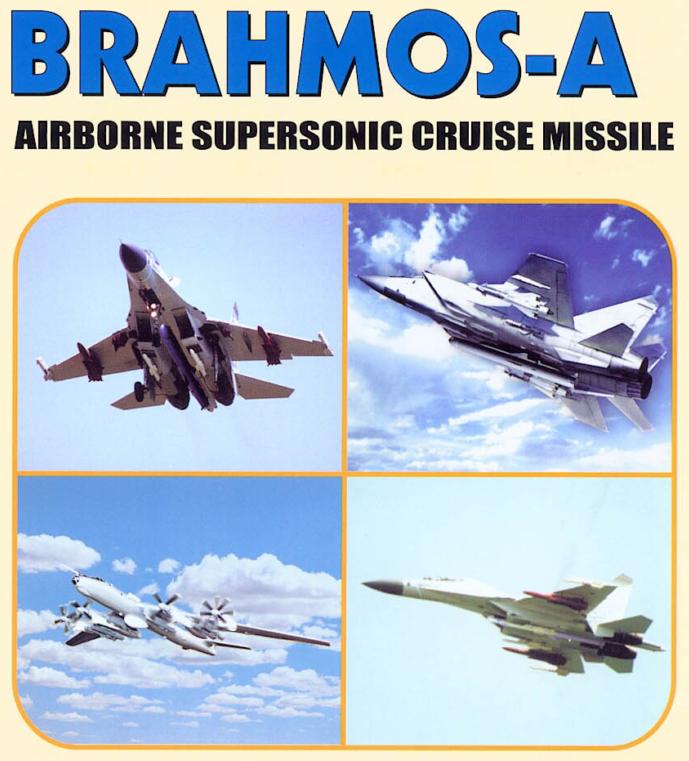
Malaysia eyes Air Launched Indo-Russian BrahMos


According to Russian Media, Malaysia’s Foreign Minister Anifah Ahman on his visit to Russia last week has shown interest in Air Launched variant of BrahMos missile, Royal Malaysian Air Force already operates 18 Russian Su-30MKM flankers, which were bought under a contract signed in 2003.


Malaysia currently is also looking for a tender for 18 combat aircraft for delivery by 2015. These aircrafts would replace the country’s MiG-29s. Malaysia in past has shown interest in purchase of BrahMos missile system jointly developed by India and Russia.
Russia has assured Malaysia, that new batch of Su-30MKM flankers will come with capability to fire Air launched BrahMos . Indian Su-30MKI are been modified to carry our first firing of Air launched BrahMos missile which most likely will happen early next year.

Su-30MKM flankers are similar to India’s Sukhoi Su-30MKI. Like its Indian counterpart, the Su-30MKM is a substantial advance upon the original Su-30K export version, India’s HAL had supplied canards, stabilizers and fins for Malaysian flankers, IAF in past deputed Instructors and technicians  in Malaysia to train pilots and Ground crews of Malaysian air force .

January 18, 2012

Malaysia becomes first export customer for Gowind corvettes


DCNS and its local partner Boustead Naval Shipyard have won a US$2.8 billion contract to supply six Gowind patrol vessels to Malaysia, in the type’s first export order. The first corvette will be delivered in 2017, with others following at six-monthly intervals.

In October 2010 Boustead received a letter of intent from the Malaysian government that requested it to build six second-generation patrol vessels. Boustead Naval Shipyard (BNS) was selected for the contract in early December last year,


Related Posts Plugin for WordPress, Blogger...